
AI Takes the Helm in Advertising
Meta plans to revolutionize advertising by introducing fully automated AI-generated ads by 2026, a move that could disrupt the traditional ad industry. This shift promises to empower small businesses while raising questions about creativity and accountability. Industry experts believe that while AI will play a larger role, human involvement will remain crucial in strategic and creative aspects of advertising.
USAGEFUTURETOOLS
The AI maker
6/29/20262 min read
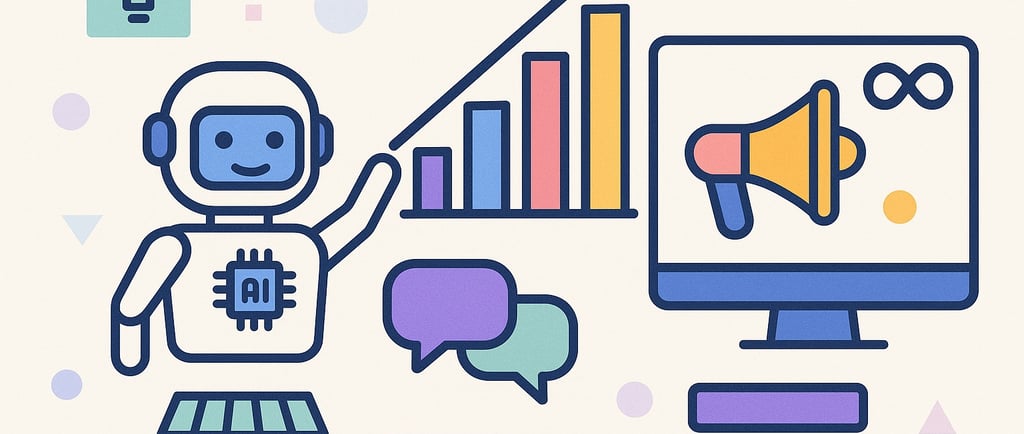
Meta is setting its sights on a future where artificial intelligence (AI) can generate ads tailored specifically to individual users on platforms like Facebook and Instagram. With the goal of fully automated ad generation by the end of 2026, this move has the potential to reshape the landscape of the $600 billion global advertising industry. Following suit, TikTok has also announced its own AI-powered advertising features, while Meta has introduced ads on WhatsApp, further intertwining the worlds of advertising and AI.
While these developments may raise concerns about job security for copywriters, designers, and media buyers, they could also provide a cost-effective solution for small and medium-sized businesses. Gary Kayye, a professor of advertising at UNC Chapel Hill, sees this as an opportunity for individual creators to leverage AI and grow their businesses. "Millions of creators who were once intimidated by advertising can now start small and scale up," he explains.
As you scroll through social media, expect to see more personalized ads. The AI systems being developed will allow businesses to target specific users, adjusting images, videos, and text based on location and context. Imagine a car ad featuring a vehicle driving up a snowy mountain when you're in a cold climate or cruising through urban streets when you’re in the city.
Kayye points out that the simplest applications of AI in advertising have always been in programmatic ads—those that are bought and sold automatically using software. If Meta's AI can accurately predict the right audiences and create multiple ad variations while running A/B/C/D tests, it could revolutionize the ad creation process.
However, experts caution that automating ad creation may lead to misinformation and biased targeting, raising ethical concerns. AI can make mistakes and can be manipulated, which can exacerbate the spread of harmful messaging. While Meta emphasizes that AI will allow agencies to focus on creativity, the potential job losses in traditional advertising firms cannot be ignored.
Kayye believes that agencies that diversify their strategies will fare better in this new landscape, while those stuck in repetitive patterns may struggle. "AI will expose those who are just assembly lines of creativity," he warns. Yet, he reassures that humans will continue to play a vital role in advertising, especially in areas like strategic thinking and creative storytelling.
In the near future, businesses will need only to outline their marketing objectives and budget, and AI will handle the rest—from crafting ad copy and visuals to determining targeting strategies and media placements. Initially, AI may start by streamlining aspects of the ad process, but Meta envisions a future where AI manages entire campaigns autonomously.
With tools like Advantage Plus already in place, Meta is paving the way for a new era in advertising. CEO Mark Zuckerberg envisions a world where any business can simply state its goals and budget, allowing AI to take over the campaign management seamlessly.
Your Data, Your Insights
Unlock the power of your data effortlessly. Update it continuously. Automatically.
Answers
Sign up NOW
info at aimaker.com
© 2024. All rights reserved. Terms and Conditions | Privacy Policy