
AI's Economic Gains vs. Environmental Costs
The IMF predicts AI will boost global GDP by 0.5% annually from 2025 to 2030, despite rising emissions from energy-intensive data centers. The environmental impact will depend on how AI is implemented, with potential for efficiency gains. Active collaboration between governments and tech companies is essential to ensure AI benefits society sustainably.
USAGEFUTUREINVESTINGTOOLSPOLICY
The AI Maker
12/22/20252 min read
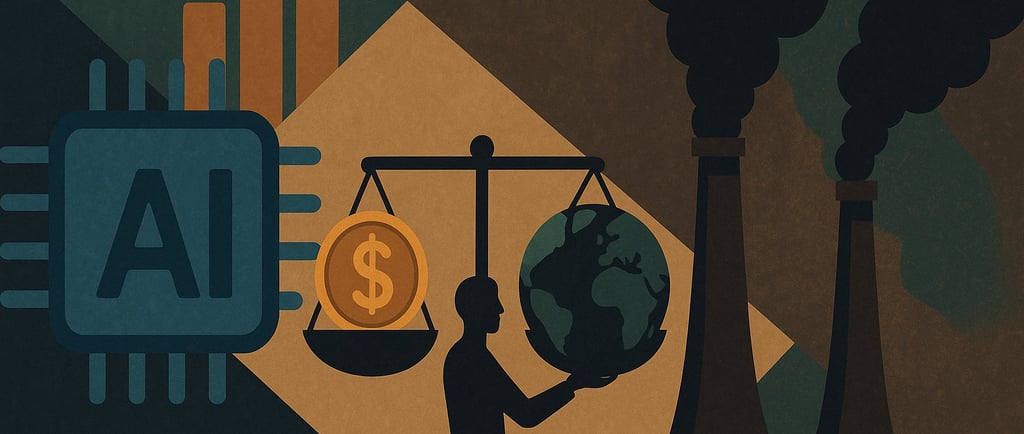
The recent report by the International Monetary Fund (IMF) has stirred conversations about the balance between economic growth and environmental impact due to artificial intelligence (AI). According to the IMF, the implementation of AI technology is expected to boost global output by approximately 0.5% annually from 2025 to 2030. This growth, however, comes with a caveat: the rising carbon emissions associated with the energy-intensive data centers necessary to support AI models.
The report highlights the significant surge in energy demand that AI will likely generate, predicting that global electricity needs could more than triple, reaching around 1,500 terawatt-hours (TWh) by 2030. To put this into perspective, this amount of energy consumption is roughly equivalent to India's current electricity usage. Interestingly, this prediction surpasses the anticipated demand from electric vehicles during the same period.
While the economic benefits of AI are clear, the report also warns that these gains will not be evenly distributed across the globe. Policymakers and businesses are urged to take proactive steps to minimize the societal costs associated with increased emissions. The IMF noted that the social cost of the additional emissions would be relatively minor compared to the economic benefits, estimated at between $50.7 billion and $66.3 billion.
So, can AI contribute to energy efficiency? The IMF's analysis suggests that the environmental impact of AI will largely depend on how it is utilized. If AI can lead to more efficient energy usage and sustainable consumption patterns, it could potentially mitigate its carbon footprint. In fact, some experts, such as those from the Grantham Research Institute on Climate Change and the Environment, speculate that AI could even help reduce overall carbon emissions by accelerating advancements in low-carbon technologies.
However, the path to sustainable AI is fraught with challenges. As noted by Roberta Pierfederici, a policy fellow at the Grantham Institute, relying solely on market forces may not be sufficient to guide AI applications towards climate action. Active involvement from governments, tech firms, and energy companies is essential. This includes funding for research and development (R&D) and the establishment of policies to address inequalities that AI advancements may exacerbate.
As we look to the future, the dialogue surrounding AI's economic potential must also encompass its environmental implications. It’s a balancing act that requires thoughtful discussion and intentional strategies. The question remains: can we harness the power of AI not just for economic gain, but also for a sustainable future?
Your Data, Your Insights
Unlock the power of your data effortlessly. Update it continuously. Automatically.
Answers
Sign up NOW
info at aimaker.com
© 2024. All rights reserved. Terms and Conditions | Privacy Policy