
AI's Impact on White-Collar Jobs: A Cautionary Perspective
Klarna's CEO, Sebastian Siemiatkowski, warns of potential job losses in white-collar sectors due to AI advancements. As his company reduces its workforce, he emphasizes the need for human skills in customer service. The balance between AI efficiency and economic stability remains a crucial conversation.
USAGEFUTUREWORKTOOLSPOLICY
The AI Maker
6/15/20262 min read
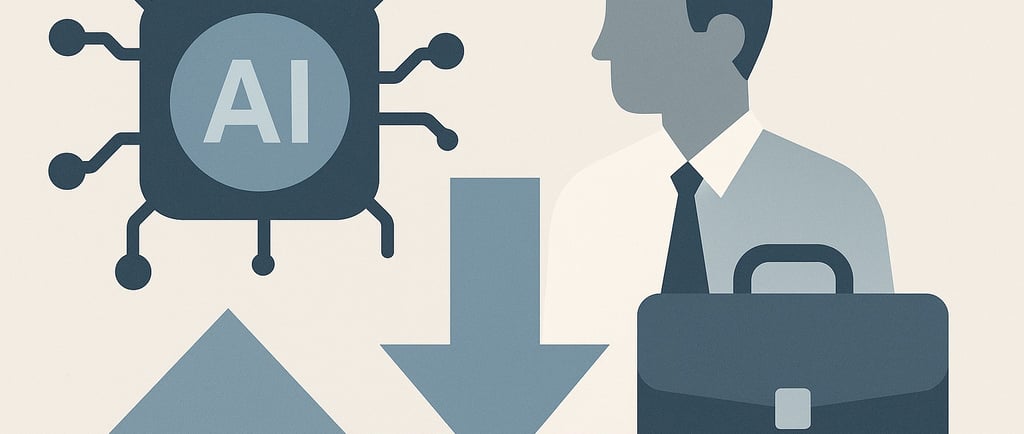
The conversation around artificial intelligence (AI) and its potential to disrupt the job market has gained traction, particularly in the context of white-collar employment. Recently, Klarna’s CEO, Sebastian Siemiatkowski, voiced concerns about an impending recession influenced by AI's growing role in replacing traditional jobs. His comments spark a dialogue on the balance between technological advancement and economic stability.
Siemiatkowski, who leads the Swedish Buy Now, Pay Later company Klarna, has been candid about the implications of AI on the workforce. He noted that his company had reduced its headcount from 5,500 to 3,000 over just two years, with aspirations to reach 2,000 through natural attrition rather than layoffs. This shift reflects a broader trend where AI technologies, such as Klarna's AI chatbot, are taking on roles traditionally filled by humans, in this case, replacing 700 customer service agents.
While acknowledging the potential benefits of AI for business efficiency, Siemiatkowski warns that the transition could lead to significant job losses, particularly in white-collar sectors. He stated, “Many people in the tech industry, especially CEOs, tend to downplay the consequences of AI on jobs.” By sharing his insights, he aims to provide a realistic perspective on the challenges that AI integration may pose for employment.
Interestingly, Siemiatkowski's remarks come at a time when Klarna is also grappling with increasing credit losses, which rose 17% to $136 million last year. He attributes these losses to the company’s growth in customer base, which naturally leads to higher default rates. However, he emphasizes that Klarna's customers, with an average debt of £100, are more likely to repay their loans compared to typical credit card holders, who often face much larger debts.
Despite his cautionary tone, Siemiatkowski is not entirely pessimistic. He observed that while consumer sentiment is currently declining, it does not yet indicate an imminent recession. He believes that the ability to adapt to AI's integration will require different types of employees, particularly those capable of handling more nuanced customer service inquiries that AI cannot manage alone. “There will be a higher value to human connection,” he noted, highlighting the ongoing need for human workers in an increasingly automated landscape.
The dialogue around AI and employment is complex and multifaceted. As companies like Klarna continue to navigate these changes, it’s clear that the balance between leveraging technology for efficiency while safeguarding jobs will be a central theme in discussions about the future of work. The challenge lies in embracing innovation while also considering its broader economic implications.
Cited: https://fortune.com/europe/2025/06/09/bnpl-loans-klarna-ceo-predicts-ai-recession/
Your Data, Your Insights
Unlock the power of your data effortlessly. Update it continuously. Automatically.
Answers
Sign up NOW
info at aimaker.com
© 2024. All rights reserved. Terms and Conditions | Privacy Policy