
AI's Transformative Role in Medical Imaging
AI is revolutionizing medical imaging, enhancing the speed and accuracy of diagnoses. With tools like the Clarity Breast platform, healthcare professionals can provide proactive patient care. As AI continues to evolve, it also highlights the need for careful implementation and training.
USAGEFUTUREWORKTOOLS
The AI Maker
8/31/20262 min read
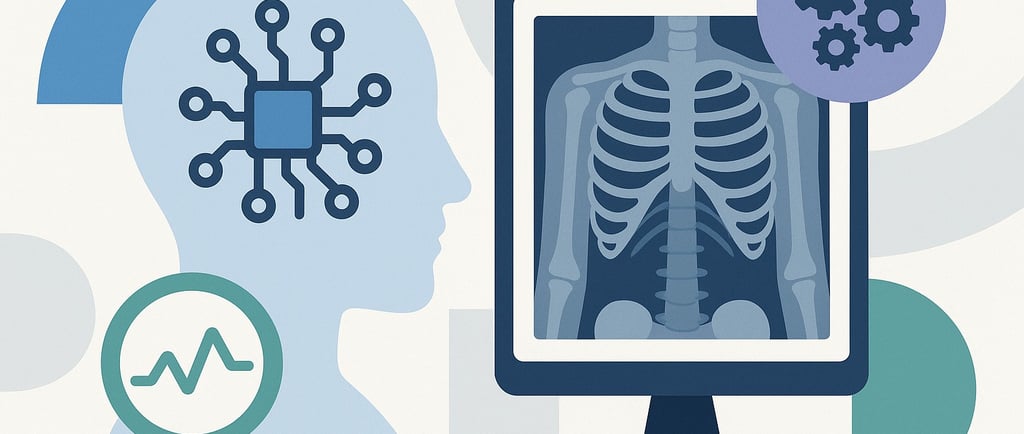
A decade ago, artificial intelligence (AI) seemed like a futuristic concept, especially in healthcare. Fast forward to June 2025, and we see a remarkable shift: 777 AI-enabled devices have received FDA clearance, with two-thirds of U.S. radiology departments integrating AI to enhance patient care. This evolution marries the expertise of radiologists with the power of machines, leading to quicker scans, clearer images, and earlier diagnoses.
The FDA's ongoing updates to its list of AI and machine learning (ML) tools reflect a growing confidence in these technologies. Algorithms designed for detecting strokes, breast cancer, and lung nodules now play a pivotal role in medical imaging. As these products are classified as software-as-a-medical-device (SaMD), vendors are required to demonstrate safety and efficacy, ensuring that patient care remains the priority.
Interestingly, AI isn’t limited to merely interpreting images; it’s also revolutionizing how they’re obtained. Deep-learning algorithms enhance low-dose CT and limited-echo MRI scans, enabling technicians to reduce radiation exposure without sacrificing detail. For instance, the Massachusetts Institute of Technology (MIT) has introduced FeatUp, a model-agnostic method that significantly boosts image resolution.
AI also serves as a valuable ally in busy trauma centers, where it prioritizes urgent cases, allowing radiologists to focus on critical findings first. However, it’s essential to acknowledge that not all radiologists may benefit equally from AI suggestions. A study from Harvard Medical School highlighted that the effectiveness of human-algorithm collaboration can depend heavily on training and interface design.
In terms of diagnostics, the FDA has approved groundbreaking tools like the Clarity Breast platform, which uses AI to predict breast cancer risk based on standard 2D mammograms. This innovative approach moves beyond detection, providing patients with actionable insights that can lead to earlier interventions.
Radiomics, another exciting development, enables AI to quantify tumor characteristics from imaging data, resulting in fewer invasive biopsies. By correlating radiomic patterns with underlying genetic mutations, oncologists can make more informed treatment decisions, enhancing patient care.
As AI continues to evolve, so does its integration into the imaging workflow. New platforms are being developed to automate reporting and streamline processes, potentially reducing errors by up to 30%. However, healthcare professionals need to carefully evaluate AI tools before implementation, ensuring they meet regulatory standards and genuinely enhance performance.
Transparency in AI algorithms is crucial to build trust among healthcare providers. Biased training data can lead to significant disparities in patient outcomes, emphasizing the need for models that perform equitably across diverse demographic groups.
Lastly, as AI foundation models advance, they promise to provide integrated digital representations of patients, combining imaging data with clinical histories. This innovation necessitates educational institutions to keep pace, offering training programs that prepare the next generation of radiologists to work seamlessly with AI technologies.
Your Data, Your Insights
Unlock the power of your data effortlessly. Update it continuously. Automatically.
Answers
Sign up NOW
info at aimaker.com
© 2024. All rights reserved. Terms and Conditions | Privacy Policy