
Amazon's AI Outlook: Workforce Changes Ahead
Amazon's CEO Andy Jassy warns that AI will lead to a reduced workforce as efficiency gains transform job roles. This shift raises concerns about job displacement across industries. While predictions vary, adapting to AI as a collaborative tool may be essential for the future of work.
WORKFUTUREINVESTINGUSAGETOOLS
The AI Maker
7/9/20262 min read
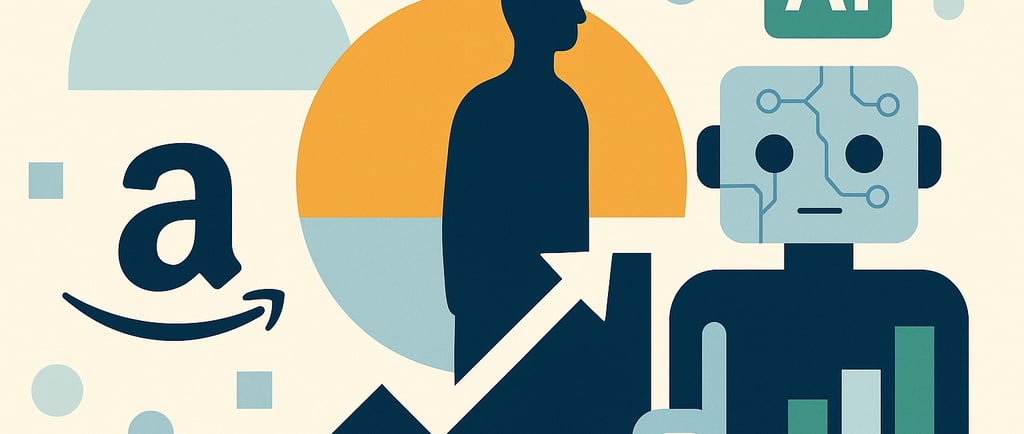
Amazon is stepping into the future with a clear vision of how artificial intelligence (AI) will reshape its workforce. In a recent blog post, CEO Andy Jassy shared insights on the company's evolving relationship with AI, emphasizing efficiency gains that could lead to a smaller human workforce. This shift is not just about reducing headcount; it’s about transforming the nature of work itself.
Jassy noted that as Amazon rolls out more generative AI and AI agents, the way tasks are performed will change significantly. He stated, "We will need fewer people doing some of the jobs that are being done today, and more people doing other types of jobs.” This sentiment reflects a broader trend in the tech industry, where AI's capabilities are advancing rapidly, leading to speculation about its long-term effects on employment.
The implications of AI are far-reaching. Jassy believes that AI will not only alter Amazon's workforce but will also influence how billions of people work and live across various industries. He mentioned that many AI agents that could revolutionize work processes are still in development, but they are on the horizon and will arrive sooner than we think.
However, the transition to an AI-enhanced workplace isn’t without its challenges. Concerns regarding job displacement have been raised by industry leaders. For instance, Anthropic CEO Dario Amodei highlighted on CNN that AI technology may accelerate unemployment rates more than many leaders anticipate. He warned that AI could potentially eliminate half of entry-level, white-collar jobs, pushing unemployment to 20% within the next few years.
While these predictions may seem alarming, some critics argue that such warnings lack substantial research and evidence. Daniel Zhao, an economist at Glassdoor, points out that disentangling the effects of AI from broader economic trends is complex. Current economic uncertainties have slowed hiring activity, making it challenging to ascertain how much of this slowdown is attributable to AI.
As we navigate this evolving landscape, it’s essential for employees and employers alike to view AI not merely as a threat but as a potential teammate. Jassy encourages employees to see AI as a resource that will become increasingly adept over time, enhancing their work rather than replacing it. This perspective may help ease fears and foster a more collaborative approach to integrating AI into the workplace.
In conclusion, while the future of work at Amazon and beyond may look different with AI's integration, it also holds the promise of new opportunities and roles. Understanding this shift is crucial for everyone involved in the workforce, as adapting to these changes will be key to thriving in an AI-enhanced world.
Cited: https://www.cnn.com/2025/06/17/business/amazon-ai-human-employees-jobs
Your Data, Your Insights
Unlock the power of your data effortlessly. Update it continuously. Automatically.
Answers
Sign up NOW
info at aimaker.com
© 2024. All rights reserved. Terms and Conditions | Privacy Policy