
Bridging the AI Knowledge Gap in the Workplace
As AI rapidly transforms workplaces, many employees feel unprepared to adapt. Companies must shift their learning strategies to promote collaboration with AI rather than competition. Investing in tailored AI training will empower employees and enhance productivity.
USAGEFUTUREWORKTOOLS
The AI Maker
12/1/20252 min read

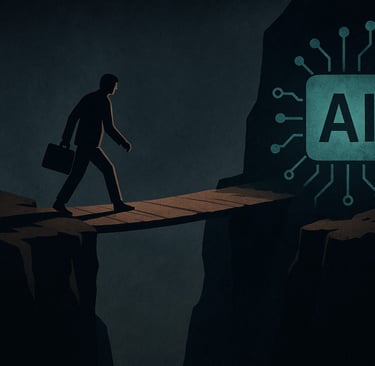
Artificial intelligence (AI) is transforming workplaces at an unprecedented speed, yet a significant number of employees remain unsure about how to effectively harness its potential. According to a recent report by Corndel, nearly half of workers feel that AI is advancing faster than their companies can train them, leading to a concerning skills gap. This gap not only threatens productivity but also creates a sense of uncertainty among employees, who often feel they are competing with AI rather than collaborating with it.
To address this issue, organizations must pivot their learning and development (L&D) strategies to encourage collaboration with AI. Here are several practical steps that L&D departments can implement:
1. AI Literacy for All Employees Start by introducing foundational AI training across the organization. This training should cover the basics of machine learning and AI capabilities, helping employees understand how to incorporate AI into their daily tasks. It’s crucial to also address the ethical implications of AI in decision-making.
2. Role-Specific AI Training Recognizing that not all employees require the same training is essential. Tailor AI training programs to cater to specific job functions. For instance, marketing teams could benefit from training on AI-powered analytics, while customer service teams might focus on AI chatbots.
3. Ethical and Responsible AI Integrate ethical AI training into workplace programs. Employees should learn to detect AI bias and understand decision-making frameworks that align AI use with company values. Interactive workshops can provide real-world dilemmas for employees to assess.
4. Hands-On AI Learning and Experimentation Encourage experimentation by setting up AI "sandboxes" where employees can safely test AI tools. Guided workshops on AI applications, along with continuous learning resources, will help reduce hesitancy in using AI.
5. Cross-Functional AI Collaboration Break down silos by fostering cross-functional collaboration. Encourage teams to share AI use cases and best practices, and consider hosting AI-driven hackathons or innovation challenges to stimulate creativity.
As we look to the future, AI will continue to shape L&D through personalized learning paths, AI-powered virtual coaches, and immersive learning experiences using virtual reality (VR) and augmented reality (AR). Companies that invest in these training strategies today will not only survive the AI revolution but will also thrive in it.
Ultimately, the question is not whether AI will change the workplace, but whether organizations will equip their employees to adapt and thrive alongside this technology. By reimagining training strategies, businesses can lead the way in defining the AI-driven workplace of tomorrow.
Your Data, Your Insights
Unlock the power of your data effortlessly. Update it continuously. Automatically.
Answers
Sign up NOW
info at aimaker.com
© 2024. All rights reserved. Terms and Conditions | Privacy Policy