
Building Confidence in AI Adoption
AI adoption in the workplace is hindered by employees' lack of confidence in using the technology. Tailored, job-specific training can enhance self-efficacy and encourage effective use. Organizations must invest in both AI tools and the people who will use them to reap the full benefits.
USAGEFUTUREWORKTOOLS
The AI Maker
5/4/20262 min read
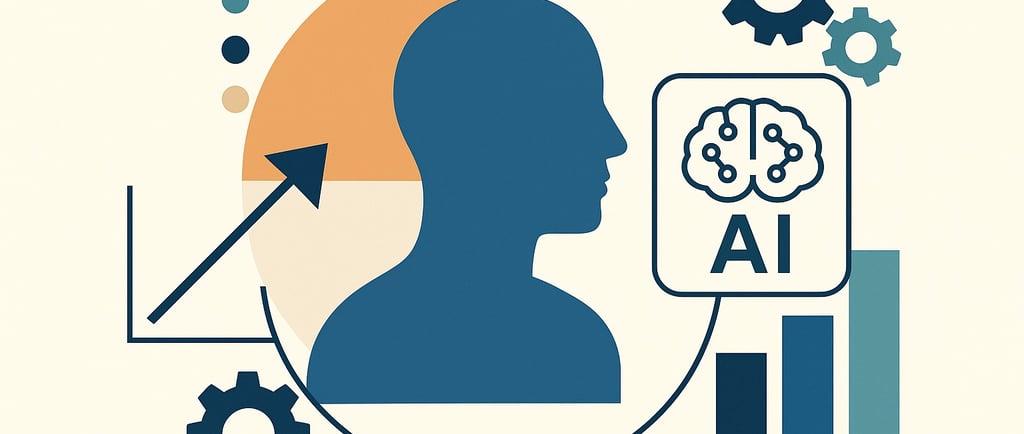
The Little Engine That Could wasn’t the most powerful train, but she believed in herself. As she set off to climb a steep mountain, she repeated: “I think I can, I think I can.” This simple phrase from a children’s story still holds a lesson for today’s business world – especially when it comes to artificial intelligence.
AI is no longer a distant promise out of science fiction. It’s here and already beginning to transform industries. Despite the hundreds of billions of dollars spent on developing AI models and platforms, adoption remains slow for many employees. A recent Pew Research Center survey found that 63% of U.S. workers use AI minimally or not at all in their jobs.
The reason? It often comes down to what researchers call technological self-efficacy, or a person’s belief in their ability to use technology effectively. Many individuals who avoid using new technology aren’t truly against it; they simply don’t feel equipped to use it in their specific jobs. Rather than risk getting it wrong, they choose to keep their distance.
Organizations often derail by focusing on building the engine but neglecting to fuel the confidence that workers need to get it moving. Albert Bandura, the psychologist who developed the theory of self-efficacy, highlighted that skill alone doesn’t determine behavior; rather, a person’s belief in their ability to use that skill effectively is crucial.
This concept applies to today’s AI-equipped workplaces. Leaders may roll out new tools expecting fast results, but employees may hesitate, unsure how AI applies to their roles or fearing they’ll appear less competent for relying on it. There’s also the familiar worry of being replaced by technology.
Training is often offered, but it tends to be too broad, covering general topics without addressing specific needs. In 2025, with the plethora of AI tools available, this approach simply isn’t enough. Tailored, job-specific training is essential.
Generational divides further complicate matters. Younger workers, being digital natives, tend to feel more confident using technology than their older counterparts, who adapted mid-career. Frustrating early experiences with AI can reinforce skepticism among those less comfortable with technology.
To effectively train employees in AI, organizations should follow Bandura’s four key sources of self-efficacy: mastery experiences, vicarious experiences, verbal persuasion, and managing emotional states. This can be achieved through cohort-based training that includes regular feedback and tailored content that meets employees’ unique needs.
Creative formats, like PricewaterhouseCoopers’ prompting parties, can provide low-stakes opportunities for employees to build confidence. Just as in “Pokemon Go!,” leveling up through small wins can be a successful strategy. The training curriculum doesn’t need to be revolutionary; it just needs to be relevant and applicable.
As organizations invest heavily in AI technologies, it’s equally important to invest in the people who will use them. While AI may change the workforce landscape, a well-trained workforce remains essential for maximizing the benefits of AI integration.
Your Data, Your Insights
Unlock the power of your data effortlessly. Update it continuously. Automatically.
Answers
Sign up NOW
info at aimaker.com
© 2024. All rights reserved. Terms and Conditions | Privacy Policy