
Fraud Charges in the AI Startup World
Albert Saniger, former CEO of the fintech app Nate, has been charged with fraud for misleading investors about the app's AI capabilities. Instead of utilizing AI, the company allegedly relied on human contractors for e-commerce transactions. This case highlights the importance of transparency in the rapidly evolving AI landscape.
USAGEFUTUREINVESTINGPOLICYTOOLS
The AI Maker
11/13/20252 min read

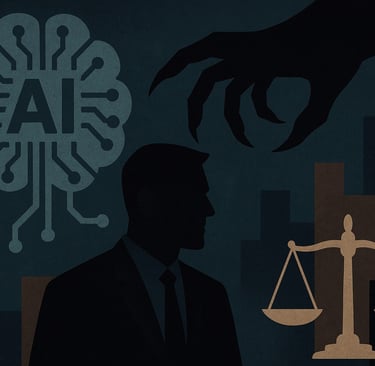
The world of artificial intelligence (AI) is often painted with a glossy sheen of innovation and futuristic promise. However, a recent case involving the former CEO of the fintech app Nate (https://www.nate.com) , Albert Saniger, has brought to light some troubling practices in the startup ecosystem. Saniger has been charged with fraud for allegedly misleading investors about the app's use of AI technology, a situation that raises important questions about transparency and ethics in the tech industry.
According to the U.S. Attorney's Office, Southern District of New York, Saniger raised over $40 million from investors by claiming that Nate utilized AI to handle e-commerce checkout processes. In a twist that flips the usual narrative on its head, the FBI alleges that it was actually a team of human contractors in the Philippines doing the work behind the scenes. This revelation has sparked discussions about the authenticity of AI claims made by startups and how such practices can erode trust in the technology sector.
The indictment states that Nate's operations were far from automated; instead, they relied heavily on manual processing by a team of workers, who were referred to as 'purchasing assistants.' FBI Assistant Director Christopher G. Raia highlighted that this deception was not just a simple oversight but a calculated strategy to mislead investors about the app's capabilities.
This case isn't an isolated incident. Other companies, such as Presto (https://www.presto.com) , which provides drive-thru automation solutions for clients like Carl's Jr. and Hardee's, have also been accused of masking human labor as AI automation. Reports suggest that Presto relied on outsourced workers for 70% of its orders, raising eyebrows about the true nature of AI in the fast-food industry. Similarly, the legal startup EvenUp (https://www.evenup.com) , which claimed to automate personal injury claims, was found to depend on human effort for much of its operations.
The AI boom has undoubtedly led to innovative solutions across various sectors, but it has also opened the door to dubious practices. The allure of AI technology has driven some entrepreneurs to exaggerate their capabilities, creating a facade to attract investment. As the U.S. Attorney Matthew Podolsky remarked, the narrative crafted by Saniger was a false one, built on the promise of innovation that never materialized.
While the 'fake it till you make it' mentality might work for some, the risks involved can be considerable, as shown by Saniger's current predicament. Facing charges of securities fraud and wire fraud, he could be looking at a maximum of 20 years in prison. This case serves as a cautionary tale for startups in the AI space to prioritize transparency and integrity over short-term gains.
Cited: https://mashable.com/article/fintech-app-nate-fraud-charges-artificial-intelligence
Your Data, Your Insights
Unlock the power of your data effortlessly. Update it continuously. Automatically.
Answers
Sign up NOW
info at aimaker.com
© 2024. All rights reserved. Terms and Conditions | Privacy Policy