
Generative AI: The Key to Rapid Business Transformation
The business landscape is rapidly changing, demanding faster digital transformation strategies. Generative AI is becoming essential for enhancing productivity and driving innovation. However, organizations must also address challenges like technical debt and security concerns to succeed.
USAGEFUTURETOOLS
The AI Maker
1/8/20262 min read
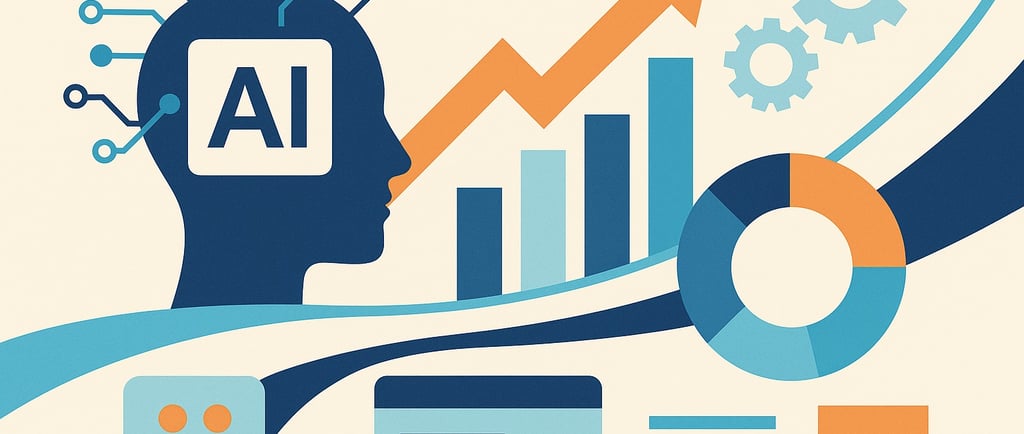
The business landscape is shifting, and speed has become a necessity for survival. Technology is advancing rapidly, compelling businesses to adapt quickly while remaining flexible to evolving market demands.
Gone are the days when transformation timelines stretched over three to five years. Nowadays, market demands and competitive pressures push organizations to deliver tangible results in under 12 months. To meet these rising demands, companies must rethink their transformation strategies, with generative AI at the forefront of this shift.
Generative AI is not just a buzzword; it’s a powerful tool that enhances developer productivity. According to McKinsey & Co (https://www.mckinsey.com) , 92% of companies plan to increase their AI investments in the next three years. By embracing generative AI, businesses can deliver smarter, faster solutions that drive significant business impact.
However, many organizations still grapple with legacy systems and siloed data, which pose substantial roadblocks to scalability and progress. IT teams accustomed to traditional methods often struggle to adapt, leading to prolonged digital transformation cycles that stifle innovation.
In fact, despite the accelerating rate of AI adoption, a staggering 52% of AI projects fail to make it to production. According to Gartner (https://www.gartner.com) , the average time from prototype to production is eight months. Such lengthy timelines stall progress, making it challenging for businesses to remain competitive in a fast-paced market.
To thrive, businesses must embrace change and innovate faster. In this context, AI has emerged as the accelerant required to meet demands for both speed and efficiency.
In the past year, the hype surrounding AI has transformed from theoretical to practical, reshaping how software is built and delivered. A collaborative report from OutSystems (https://www.outsystems.com) and KPMG (https://home.kpmg/xx/en/home.html) indicates that 93% of executives plan to boost AI investments. Generative AI streamlines software development through automated code generation, rapid prototyping, and code translation between programming languages.
As businesses adopt these advancements, generative AI becomes a driving force for digital transformation. It drastically reduces development time and costs, enabling industries to adapt or risk being left behind.
Furthermore, combining generative AI with low-code platforms enhances software development efficiency. Low-code simplifies complex tasks, allowing IT teams to customize, iterate, and deploy solutions quickly. This powerful combination empowers businesses to build and deploy generative AI-driven applications in record time, compressing timelines from years to months.
While AI adoption presents new opportunities, it also introduces challenges such as technical debt and security concerns. Without proper governance and guidelines, AI-generated code can accumulate technical debt, complicating future scalability. Additionally, generative AI may inadvertently expose sensitive information, so establishing clear AI governance and compliance measures is essential.
In today’s digital landscape, success is measured by key outcomes like speed to market, customer satisfaction, and cost efficiency. AI-powered low-code platforms are enabling businesses to meet these benchmarks, proving that digital transformation is no longer a lengthy process. In a world where speed defines success, those who can transform at the pace of generative AI will thrive.
Cited: https://www.techradar.com/pro/generative-ai-the-catalyst-for-business-transformation
Your Data, Your Insights
Unlock the power of your data effortlessly. Update it continuously. Automatically.
Answers
Sign up NOW
info at aimaker.com
© 2024. All rights reserved. Terms and Conditions | Privacy Policy