
Navigating AI Transparency in the Workplace
A KPMG study reveals many employees hide their AI usage at work, leading to trust and ethical concerns. With only 47% receiving AI training, transparency is lacking. Organizations must prioritize AI education to foster trust and improve outcomes.
USAGEFUTURETOOLS
The AI Maker
1/15/20262 min read

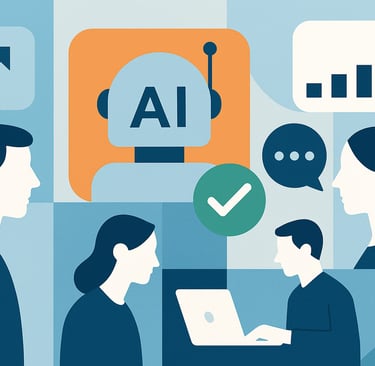
A recent study by KPMG and the University of Melbourne sheds light on a curious trend in the workplace: many employees are not fully transparent about their use of artificial intelligence (AI) tools. The research, which surveyed over 48,000 individuals across 47 countries, revealed that a staggering 57% of workers admitted to hiding their AI usage, often presenting AI-generated content as their own. This raises important questions about trust, transparency, and the ethical implications of AI in our daily professional lives.
According to the KPMG Trust in AI report (https://home.kpmg/xx/en/home/insights/2025/01/trust-attitudes-and-use-of-artificial-intelligence.html) , titled "Trust, attitudes, and use of artificial intelligence: a Global Study 2025," 58% of respondents intentionally use AI for work, with about a third leveraging these tools at least weekly. Yet, the study also indicates a concerning trend: many employees are using AI without adequate training or understanding of its implications. Only 47% reported receiving any AI training, and 66% admitted to using AI tools without evaluating the accuracy of the results.
Nicole Gillespie, a professor at the University of Melbourne and one of the study’s authors, highlighted that a lack of transparency can lead to significant organizational risks, including data breaches and compliance issues. She noted that the pressure to keep up with colleagues often drives employees to use AI covertly, creating a cycle of mistrust and potential errors. "When employees feel they must hide their AI use, it erodes the trust that is essential for innovation and growth," said Gillespie.
Sam Gloede, KPMG’s global trusted AI transformation leader, echoed these concerns, emphasizing that trust is a strategic asset for organizations. He pointed out that the lack of understanding around AI not only leads to misuse but also reinforces a negative perception of AI technologies. Organizations must prioritize building trust by offering comprehensive training and governance around AI use.
The study also revealed a discrepancy in trust levels between emerging and advanced economies, with countries like India and Nigeria showing significantly higher trust in AI (82% compared to 65% in advanced economies). This correlation suggests that improved literacy and training can enhance trust and successful adoption of AI technologies.
To foster a healthier relationship with AI in the workplace, organizations should invest in foundational and role-based training. Gillespie suggests creating communities of practice where employees can share experiences, learn from mistakes, and experiment with AI tools without fear of repercussions. By promoting openness and transparency in AI use, companies can build not only trust but also a more effective and innovative workforce.
Cited: https://www.businessinsider.com/kpmg-trust-in-ai-study-2025-how-employees-use-ai-2025-4
Your Data, Your Insights
Unlock the power of your data effortlessly. Update it continuously. Automatically.
Answers
Sign up NOW
info at aimaker.com
© 2024. All rights reserved. Terms and Conditions | Privacy Policy