
Navigating the Wild West of AI and Actor Rights
The rise of AI technology has raised concerns for actors regarding the unauthorized use of their likenesses. Case studies of Simon Lee and Connor Yeates highlight the risks inherent in contracts with AI companies. As the industry evolves, actors must navigate a complex landscape to protect their identities and rights.
USAGEFUTURETOOLSWORK
The AI Maker
12/11/20252 min read
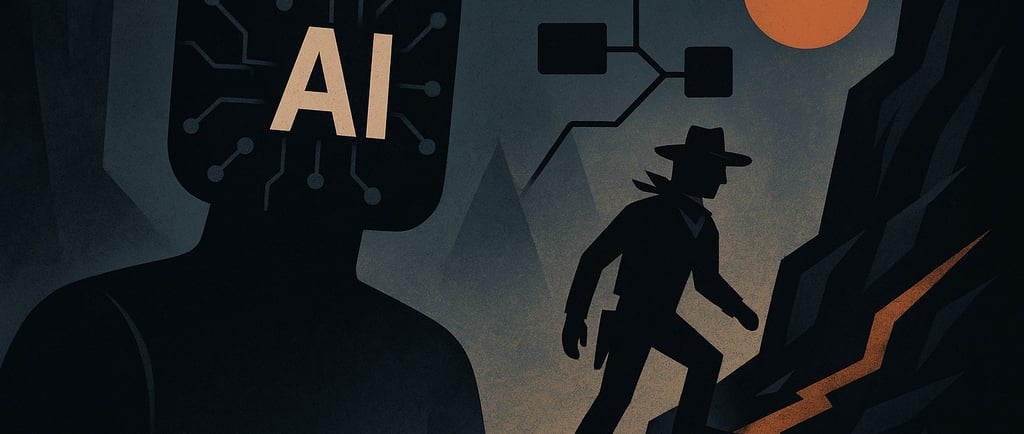
The rapid advancement of AI technology has brought about unprecedented opportunities and challenges, particularly for those in the acting profession. As we delve deeper into the implications of AI-generated content, it's crucial to examine the stories of actors who have faced the consequences of their likenesses being used without proper consent.
Take the case of South Korean actor Simon Lee (https://www.afp.com/en/) , who discovered his image was being utilized to promote dubious health products on platforms like TikTok and Instagram. Despite having signed a contract, Lee found himself powerless to remove the misleading videos that exploited his likeness. “If it was a nice advertisement, it would've been fine to me,” he remarked, highlighting the troubling nature of his situation.
Similarly, British actor and model Connor Yeates (https://www.afp.com/en/) signed a three-year agreement with Synthesia (https://www.synthesia.io/) for a modest fee, only to later discover that his face was used in a video promoting a political coup in Burkina Faso. This blatant misuse was a violation of Synthesia’s terms of service. Yeates’s experience underscores the risks actors face when they enter into contracts without fully understanding the implications.
These narratives illustrate how AI technology can inadvertently fuel misinformation and misuse individuals’ identities. With minimal effort, anyone can create a convincing video featuring someone else’s likeness if there’s enough existing footage available. Public figures, including Taylor Swift (https://www.taylorswift.com/) and Scarlett Johansson (https://www.scarlettjohanssonworld.com/) , have been vocal about their concerns regarding deepfakes that distort their images for political agendas.
Moreover, actors in the video game industry, like the voice of Aloy from the “Horizon” series, have expressed discomfort over AI imitations of their performances. The landscape is becoming increasingly complex as background actors also voice their worries about being digitally replicated for indefinite use by studios.
Despite ongoing efforts to secure protections against generative AI, many actors find themselves navigating a landscape where such protections are limited, especially in non-union roles. This creates a precarious situation where AI companies can exploit desperate actors, often leading them to sign contracts that grant broad rights over their images and voices.
Legal experts, such as Alyssa Malchiodi (https://www.afp.com/en/) , point out that actors must be wary of contracts that use vague, perpetual language, which can grant companies sweeping rights over their likenesses. As the industry evolves, it’s essential for actors to be informed and cautious about the agreements they enter into.
In light of these challenges, Synthesia has announced a new talent experience program aimed at involving actors in decision-making processes. While this is a step in the right direction, widespread adoption of protective measures is necessary to ensure that actors retain control over their own images and identities in an increasingly AI-driven world.
Your Data, Your Insights
Unlock the power of your data effortlessly. Update it continuously. Automatically.
Answers
Sign up NOW
info at aimaker.com
© 2024. All rights reserved. Terms and Conditions | Privacy Policy