
The Rise of Vibe Coding: Redefining Technical Skills for Founders
The emergence of vibe coding is redefining what it means to be a technical founder. Investors are now prioritizing domain expertise and AI proficiency over traditional coding skills. As the landscape shifts, founders must adapt to these new expectations to thrive.
USAGEFUTUREINVESTINGTOOLS
The AI Maker
11/17/20252 min read

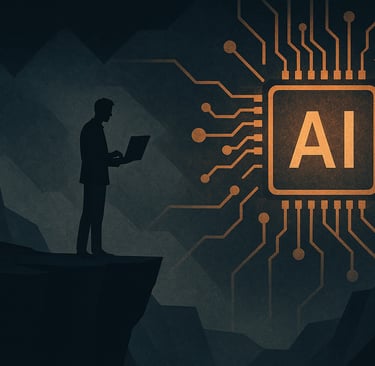
The world of software development is evolving, and with it comes a fresh perspective on what it means to be a technical founder. The emergence of 'vibe coding'—a term coined by OpenAI cofounder Andrej Karpathy (https://www.openai.com/about/andrej-karpathy) —is shaking up traditional views. Investors are now considering a broader skill set beyond just coding expertise.
Historically, venture capitalists have favored software startup founders with strong technical skills, particularly those who can code. However, as artificial intelligence (AI) tools become more accessible, individuals from non-technical backgrounds can now write code simply by providing instructions. This shift has prompted investors to look for attributes like domain expertise, business acumen, and proficiency with AI tools.
According to Anton Osika (https://www.lovable.com) , CEO of Lovable, the platform that facilitates vibe coding, the ability to effectively utilize AI is now considered a technical skill. This shift is significant; investors are increasingly drawn to founders with a solid understanding of their industry, complemented by a technical product, rather than solely technical prowess.
Bob Thomas, a partner at the software VC fund Oxx (https://www.oxx.vc) , emphasizes that successful businesses depend more on the founder's deep knowledge of their vertical than on traditional coding skills. For instance, a founder with two decades of experience in accounting can leverage that expertise to create innovative solutions that resonate with users.
As the vibe-coding era progresses, expectations for technical founders are changing. Priya Saiprasad (https://www.touringcapital.com) , general partner at Touring Capital, notes that technical teams will increasingly focus on enhancing product engagement and user experience, rather than just coding new features from scratch.
Investors are also adjusting their criteria for what constitutes a 'technical' founder. With AI taking over many coding tasks, the need for founders to possess an 'architect's mindset' is paramount. Yashwanth Hemaraj (https://www.bgv.vc) , a general partner at BGV, explains that this mindset allows founders to understand how different components of their product connect and interact.
This new perspective means that founders must be adept at identifying and fixing bugs quickly, regardless of the AI tools they use. As Zoe Qin (https://www.dawncapital.com) of Dawn Capital notes, early-stage founders can leverage AI to establish product-market fit, while later-stage founders are expected to have already achieved that fit.
In conclusion, the landscape for startup founders is shifting dramatically. As vibe coding takes hold, the focus is moving from purely technical skills to a blend of domain knowledge, AI proficiency, and architectural thinking. This evolution is redefining what it means to be a successful founder in the tech world.
Cited: https://www.businessinsider.com/vibe-coding-vc-technical-founders-skills-investors-2025-4
Your Data, Your Insights
Unlock the power of your data effortlessly. Update it continuously. Automatically.
Answers
Sign up NOW
info at aimaker.com
© 2024. All rights reserved. Terms and Conditions | Privacy Policy