
Why Context Engineering Could Be the Future of AI Interaction
The term 'context engineering' is emerging as a more accurate alternative to 'prompt engineering' in AI interactions. This concept emphasizes the art and science of providing the right context for LLMs to perform effectively. As the AI landscape evolves, mastering context engineering will be crucial for leveraging the full potential of LLMs.
WORKFUTUREUSAGETOOLS
The AI Maker
8/17/20262 min read
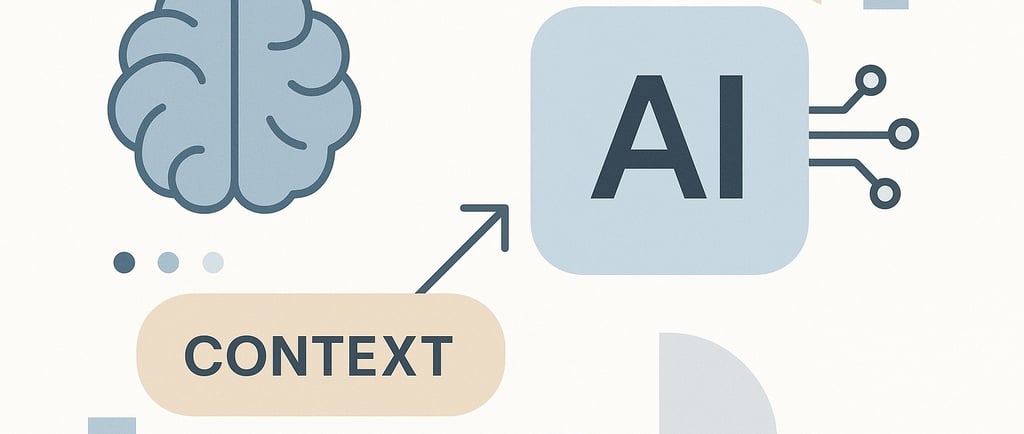
The term context engineering has recently emerged as a more fitting alternative to the buzzword we’ve all heard: prompt engineering. This shift in terminology is not just a matter of semantics; it encapsulates the intricate skill set required to effectively interact with large language models (LLMs).
Shopify CEO Tobi Lutke (https://twitter.com/tobi/status/1935533422589399127) recently shared his endorsement of the term, noting that it better describes the core skill involved: the art of providing all the necessary context for a task to be successfully executed by the LLM. This perspective is echoed by AI researcher Andrej Karpathy (https://twitter.com/karpathy/status/1937902205765607626) , who emphasizes that while prompts suggest brief task descriptions, context engineering is about filling the context window with precisely the right information to facilitate the next step in the process.
So, what does this really mean for those of us interested in harnessing the power of AI? Well, it turns out that context engineering is both a science and an art. The scientific aspect requires an understanding of task descriptions, few-shot examples, retrieval-augmented generation (RAG), and possibly even multimodal data. It’s about knowing what tools and state history are necessary to inform the model effectively.
On the artistic side, it involves an intuitive grasp of how LLMs interpret and respond to various inputs. This balance of art and science is what makes context engineering a complex yet crucial skill in the realm of AI.
In contrast, the term prompt engineering has often been misinterpreted. Many people associate it with the simplistic notion of just typing commands into a chatbot. This misunderstanding diminishes the true complexity of what it means to construct effective prompts. As Lutke pointed out, context engineering may have a better chance of retaining its intended meaning because it aligns more closely with the actual work involved.
Moreover, as the field of AI continues to evolve, the need for skilled individuals who can master the nuances of context engineering will only grow. Companies looking to leverage LLMs effectively will benefit from fostering talent that understands how to communicate with these models in a way that maximizes their output.
In conclusion, as we navigate the future of AI, adopting terms like context engineering could provide a clearer understanding of the skills required for successful interactions with LLMs. It’s a term that captures the essence of what it means to work with AI, allowing for a more nuanced and effective approach to this rapidly advancing technology.
Cited: https://simonwillison.net/2025/Jun/27/context-engineering/
Your Data, Your Insights
Unlock the power of your data effortlessly. Update it continuously. Automatically.
Answers
Sign up NOW
info at aimaker.com
© 2024. All rights reserved. Terms and Conditions | Privacy Policy